
Beyond Rankings: Building Digital Ecosystems That Create Sustainable Growth
Introduction
What if reaching the top of Google is only the beginning of your digital growth?
A high search ranking can bring visibility, but what happens after someone clicks your website? If your content, social media, website, advertising, and customer journey work separately, valuable opportunities can disappear before a visitor becomes a customer.
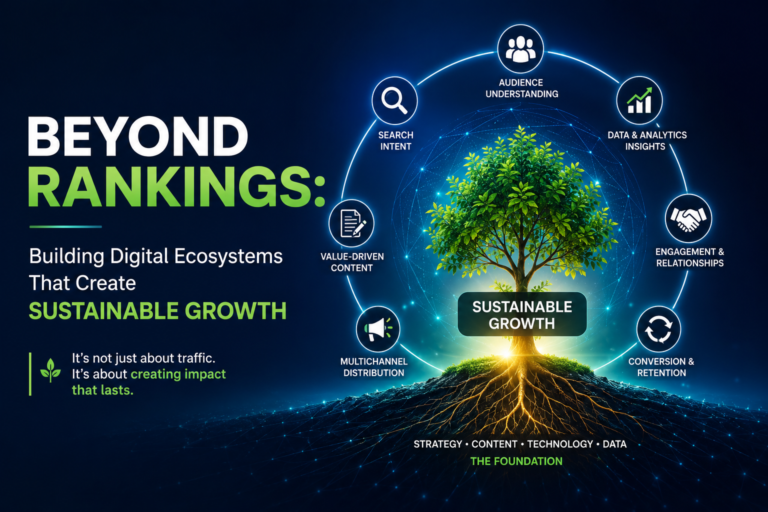
This is where building a digital ecosystem for sustainable growth becomes important. Instead of relying on rankings alone, businesses can connect SEO, websites, content marketing, social media, paid advertising, analytics, and conversion strategies into one coordinated system.
A strong digital ecosystem strategy helps turn online visibility into meaningful interactions, qualified leads, customer trust, and long-term growth. It creates a connected experience where every digital channel supports the next step in the customer journey.
So, how can businesses turn individual digital marketing activities into one growth-focused system? The following elements provide a practical framework for building a digital ecosystem that supports sustainable business growth.
Building a Digital Ecosystem for Sustainable Growth
A sustainable digital presence is not built through one channel. It develops when different digital assets work together toward the same business goal. From attracting the right audience to converting visitors and building lasting customer relationships, every part of the ecosystem should have a clear purpose.
1. Build a Strong Website Foundation
Your website is the central foundation of your digital ecosystem. It should do more than display information. A professional website needs clear messaging, simple navigation, mobile-friendly design, fast performance, useful content, trust signals, and strong calls to action.
When visitors arrive from Google or social media, they should quickly understand what you offer, who you help, and what they should do next. A well-structured website can therefore turn digital visibility into meaningful customer interactions.
2. Connect SEO With Search Intent
SEO should focus on more than achieving a high position for a keyword. Search intent helps businesses understand why people search and what they expect to find.
Create content for different stages of the customer journey:
- Awareness: Educational blogs and guides
- Consideration: Comparisons, case studies, and detailed service content
- Decision: Service pages, testimonials, portfolios, and FAQs
- Action: Contact forms, bookings, calls, or enquiries
This helps attract relevant visitors while giving them useful information at the right stage of their decision-making process.
3. Turn Content Into a Connected Asset
Instead of creating completely separate content for every platform, one valuable topic can support multiple channels.
For example, a detailed blog can become a social media carousel, Reel, LinkedIn post, infographic, email, or short video. Each format can direct interested users toward the relevant website page.
This creates a content ecosystem where valuable information continues working across different digital touchpoints instead of being used only once.
4. Make Social Media Part of the Customer Journey
Social media can strengthen the connection between discovery and trust. A potential customer might discover a business through Instagram, visit its website, check reviews, and return later through search or an advertisement.
For this reason, social media should support wider business objectives such as website visits, enquiries, engagement, brand awareness, and lead generation—not simply follower growth.
5. Create Clear Conversion Paths
Getting visitors to your website is only one step. The next action should be easy to understand.
Every important page should answer three questions:
What does the visitor need? Why should they trust you? What should they do next?
Depending on the business, the next step could be requesting a quote, booking a consultation, making a purchase, calling the business, or sending a WhatsApp enquiry.
A clear conversion path helps connect website traffic with measurable business outcomes.
6. Connect Paid and Organic Marketing
SEO can build long-term search visibility, while Google Ads and Meta Ads can help businesses reach specific audiences through targeted campaigns.
When organic and paid marketing share useful insights, businesses can identify which audiences, messages, content, and offers generate meaningful responses.
The objective is not to depend entirely on one marketing channel. It is to build a balanced digital marketing ecosystem that can adapt to changing customer behaviour.
7. Measure the Complete Growth Journey
Sustainable digital growth requires looking beyond clicks and rankings. Businesses should understand what happens after people discover their brand.
Important metrics can include:
- Organic visibility
- Website engagement
- Qualified enquiries
- Conversion rate
- Cost per lead
- Returning visitors
- Customer retention
- Revenue-related outcomes
A useful growth cycle is:
Discover → Engage → Trust → Convert → Retain → Learn → Improve
When these stages are connected, businesses can identify where customers are dropping off and where improvements can create greater results.
Why a Connected Digital Ecosystem Matters
Search rankings can create visibility, but visibility alone does not guarantee sustainable growth. The real opportunity begins when that visibility connects with a strong website, useful content, social media, advertising, trust signals, and clear conversion paths.
A connected digital ecosystem strategy allows businesses to turn different marketing activities into one coordinated customer journey. It also provides valuable data that can be used to improve future campaigns, content, website experiences, and customer interactions.
The goal is not simply to rank higher.
The goal is to build a digital presence that can attract the right audience, build trust, generate opportunities, convert visitors, and continue improving over time.
By connecting SEO, content, websites, social media, paid advertising, analytics, and conversion strategies, businesses can move beyond rankings and create a stronger foundation for sustainable digital growth.
Conclusion
Ranking on Google is valuable, but sustainable digital growth begins with what happens after the click. A strong online presence needs more than search visibility. It requires a connected digital ecosystem where SEO, website design, content marketing, social media, paid advertising, analytics, and conversion strategies work together.
When these elements support the same business goals, brands can attract relevant audiences, build trust, generate qualified leads, and create stronger customer relationships. Instead of measuring success only through keyword positions or website traffic, businesses can focus on meaningful outcomes such as engagement, conversions, customer retention, and long-term growth.
The digital landscape continues to change, so your strategy should evolve with customer behaviour and business needs. Build a website that converts, create content that helps, optimize for search intent, connect your channels, and measure what truly matters.
For more information on creating a strong digital presence, connect with a Social Media Marketing Expert and WordPress Web Developer who can help bring your website, social media, SEO, and marketing strategies together.
By moving beyond rankings and building a connected digital marketing ecosystem, businesses can create a stronger foundation for sustainable digital growth.